

The fine jewelry landscape is undergoing its most profound disruption in over a century. For generations, the luxury jewelry trade relied on an architecture of scarcity, built around geological excavation, romanticized heritage, and opaque supply chains. Today, that traditional framework faces a powerful challenge from modern science and shifting cultural values.
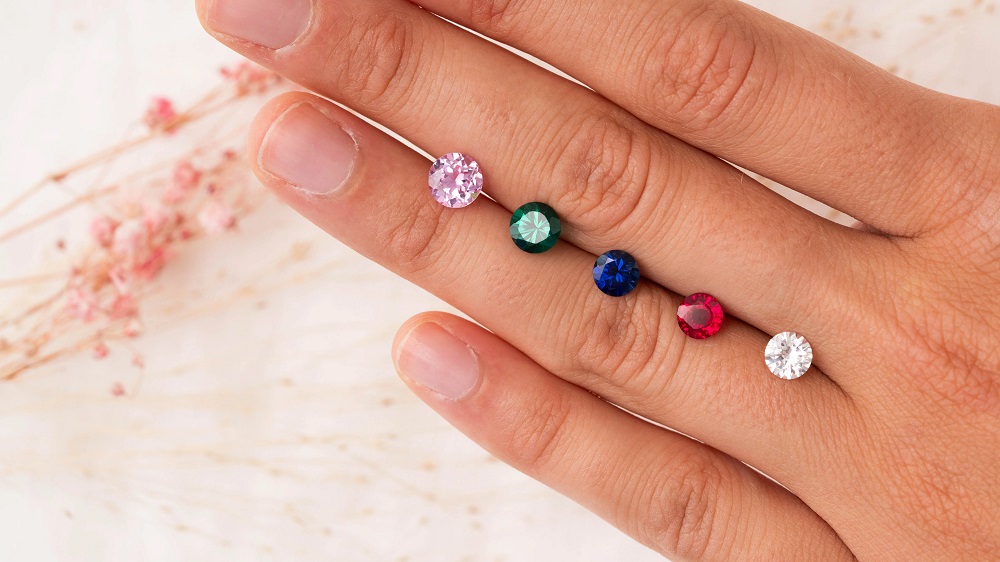
Lab-grown gemstones, including cultivated diamonds, vibrant sapphires, deep rubies, and vivid emeralds, have transitioned from scientific curiosity to mainstream luxury staples. Discerning shoppers no longer view cultured stones as cheap substitutes or novelty simulants. Instead, buyers recognize them for what they truly are: authentic, chemically identical minerals that offer superior clarity, transparent provenance, and remarkable value. The rapid rise in demand for lab-grown gemstone jewelry marks a permanent shift toward conscious, design-led personal adornment.
Scientific Authenticity: Dispelling the Simulant Myth
To understand the surge in consumer adoption, one must first dismantle the misconception that lab-grown stones are synthetic imitations like cubic zirconia or glass crystal.
Cultivated gemstones are not lookalikes; they are real gems grown in highly controlled laboratory environments that replicate the intense temperature and pressure conditions found deep within the mantle of the earth.
-
Identical Chemical Composition: A lab-grown diamond consists of crystallized carbon arranged in an isometric cubic lattice, matching a mined diamond atom for atom. Cultivated sapphires and rubies share the exact corundum mineral composition ($Al_2O_3$) with trace amounts of chromium, iron, or titanium that produce their signature crimson and royal blue hues.
-
Matched Physical Properties: Cultivated stones register identical hardness ratings on the Mohs scale, scoring a ten for diamonds and a nine for sapphires and rubies. They exhibit the exact same optical brilliance, refractive index, dispersion, and physical density as earth-mined minerals.
-
Standard Gemological Certification: Premier gemological institutions, including the Gemological Institute of America and the International Gemological Institute, grade and certify lab-grown stones using the same rigorous four-C criteria (cut, color, clarity, and carat weight) applied to mined stones.
Because their atomic structures are identical, even experienced gemologists cannot distinguish a high-grade cultivated stone from an earth-mined counterpart with a standard jeweler loupe. Specialized spectroscopic equipment is required to detect the subtle growth patterns unique to controlled laboratory synthesis.
Ethical Transparency and Conflict-Free Sourcing
Modern luxury consumers, particularly Millennials and Generation Z, demand radical transparency regarding how their purchases impact the world. The mined gemstone trade has long struggled with issues of environmental degradation, ecosystem displacement, water pollution, and complex human rights concerns in conflict-prone mining regions.
While initiatives like the Kimberley Process attempted to curb illicit trading, complex global supply chains often obscure the journey of an earth-mined stone from the pit to the jeweler showcase.
Lab-grown gemstones eliminate this ethical ambiguity:
-
Guaranteed Provenance: A cultivated stone possesses an unbroken, verified chain of custody originating directly from a modern technological facility, eliminating ties to conflict financing or unsafe artisanal labor.
-
Reduced Ecological Impact: Growing crystals in modern facilities drastically reduces the open-pit excavation, soil erosion, and habitat destruction inherent to industrial mining.
-
Renewable Energy Integration: Leading gemstone laboratories increasingly power their crystal-growing reactors with renewable solar, wind, and hydroelectric energy, further minimizing the carbon footprint of production.
For couples selecting engagement rings or milestone anniversary gifts, the assurance that their purchase is completely conflict-free adds profound sentimental value to the jewelry piece.
The Democratization of Exceptional Quality and Scale
Historically, acquiring an eye-clean emerald or an unheated, cornflower-blue sapphire of substantial carat weight required extraordinary financial wealth. In nature, high-clarity colored stones are exceedingly rare, with natural emeralds almost always featuring dense internal fractures and inclusions known as jardin.
Lab-grown crystal cultivation democratizes access to elite optical grades that were once financially unobtainable for the average buyer:
-
Flawless Color Saturation: Technicians can manage trace elements with molecular accuracy, yielding rich pigeon-blood rubies and vivid Colombian-style emeralds that showcase uniform, glowing saturation.
-
Enhanced Internal Clarity: By eliminating random mineral debris, volatile gas bubbles, and sudden tectonic shocks during growth, lab environments produce cleaner crystalline structures with exceptional transparency.
-
Substantial Carat Affordability: Consumers can secure stones that are two to three times larger than earth-mined alternatives within the exact same budget allocation.
This accessibility allows jewelry designers to craft breathtaking, red-carpet-worthy statement necklaces, cocktail rings, and tennis bracelets that consumers can wear comfortably without fear of financial ruin.
Technological Advancements Driving Precision Craftsmanship
The rapid evolution of crystal growth technology has significantly elevated the quality and availability of cultivated stones. Laboratories primarily deploy two sophisticated methodologies to grow gemstone crystals:
-
Chemical Vapor Deposition (CVD): Primarily utilized for diamond growth, this method places a razor-thin diamond seed in a vacuum chamber filled with carbon-rich gases. When heated into a high-energy plasma, carbon atoms break down and deposit layer by atomic layer onto the seed crystal, forming pure rough diamond.
-
High-Pressure High-Temperature (HPHT): This technique mimics the geological furnace of the earth, utilizing mechanical presses to apply pressures exceeding sixty thousand atmospheres and temperatures above two thousand degrees Celsius to dissolve carbon and reform it into crystalline diamond.
-
Hydrothermal and Flux Methods: For colored gemstones like emeralds and corundum, hydrothermal autoclaves recreate the superheated mineral solutions of underground hydrothermal veins. Over weeks of slow crystallization, gem-grade rough grows with natural optical phenomena and stunning depth.
These refined manufacturing techniques ensure consistent supply, allowing jewelry brands to match colors and proportions precisely across multi-stone eternity bands and graduated necklaces.
Customization and Creative Freedom for Contemporary Designers
Beyond traditional bridal jewelry, lab-grown gemstones have liberated independent jewelry artisans and bespoke designers. In the past, working with rare, expensive natural gems forced cutters to preserve as much rough weight as possible, frequently compromising on optimal optical symmetry to retain carat mass.
Because cultivated rough is readily accessible, master lapidaries can prioritize optical brilliance over yield preservation:
-
Precision Custom Cuts: Cutters can experiment with innovative faceting patterns, architectural hexagonal steps, dramatic portrait cuts, and antique European cuts without the penalty of losing irreplaceable mined carats.
-
Bold Color Contrasts: Designers freely combine large cultivated stones, such as matching teal sapphires with warm yellow diamonds, to create avant-garde fine jewelry collections that stand out in a saturated market.
-
Playful Daily Luxury: Affordability encourages consumers to buy fine jewelry for self-expression, shifting the market away from passive gifting toward frequent, self-purchased fine accessories.
By releasing fine jewelry from the constraints of artificial scarcity, lab-grown stones make vibrant, custom adornment accessible for everyday life.
Frequently Asked Questions
Do lab-grown gemstones hold long-term monetary resale value?
Lab-grown gemstones should be purchased for their personal beauty, ethical integrity, and craftsmanship rather than as financial investment assets. As production technologies continue to advance and global supply increases, wholesale prices may soften over time, making them a lifestyle luxury rather than a speculative wealth-storage vehicle.
Can a jeweler thermal or electrical tester identify a lab-grown diamond?
No. Handheld diamond testers that measure thermal and electrical conductivity will register a lab-grown diamond as a real diamond because the heat and electrical conductivity of both stones are identical. Gemological laboratories use specialized ultraviolet luminescence and infrared spectroscopy to verify lab-grown origin.
Do lab-grown gemstones discolor, turn cloudy, or fade over time?
No. Because lab-grown stones possess the exact hardness, density, and crystalline structure of earth-mined gems, they never fade, turn milky, or lose their brilliance. They maintain their clarity and polish indefinitely under normal daily wear.
How does the price of a lab-grown emerald compare to an earth-mined emerald?
A top-tier lab-grown emerald generally costs between seventy to ninety percent less than an earth-mined emerald of comparable size and clarity. This disparity is particularly stark with high-clarity stones, as mined emeralds with minimal inclusions command astronomical prices in the auction market.
Are lab-grown diamonds covered by standard personal jewelry insurance policies?
Yes. Major homeowners, renters, and specialized jewelry insurance providers insure lab-grown gemstone jewelry under standard scheduled personal property endorsements, with premiums based directly on the appraised market replacement value of the piece.
What is the environmental footprint of lab-grown gems compared to open-pit mining?
Producing gemstones in a laboratory significantly reduces earth displacement, soil erosion, biodiversity destruction, and toxic acid rock drainage associated with heavy open-pit mineral excavation. While laboratories require substantial electricity, many modern facilities mitigate this by operating on certified renewable energy grids.
How are lab-grown gems identified and hallmarked to prevent consumer confusion?
Reputable grading organizations micro-laser an indelible inscription onto the girdle of the stone, invisible to the naked eye, that records the unique certificate number and states that the gem is laboratory-grown, ensuring complete retail transparency.